
Staithes Museum Newsletter January 2026


Happy New Year!
It’s been a quiet, rainy start to the year, but there’s still plenty going on behind the scenes at the museum — from poetry exhibitions and folklore in the Yorkshire Post, to planning our new audio guide and preparing for some exciting visits and projects ahead.
There are also details of the next volunteers’ meeting and a visit from the High Sheriff on 5th March, which you’re very welcome to come along to.
As always, thank you for everything you do for the museum. We really couldn’t do this without you.
Very best wishes,
Rosie
pdf link:
Staithes Museum Makes a Splash in the Yorkshire Post!

We’re thrilled to share that Staithes Museum and our new booklet, The Mermaids of Staithes, co-created with folklorist Prof Sarah Peverley, were featured in the Yorkshire Post!
The article dives into the fascinating legend of two mermaids who washed ashore in Staithes, their curse of Jackdaw’s Well, and the rich folklore that has survived along our coastline for centuries. Prof Peverley’s research traces the story back to the Whitby Gazette in 1924, uncovering tales documented by local shopkeeper Robert Brown, the town’s “unofficial folklorist.”
The booklet brings these legends to life, pairing historical research with artwork by Yorkshire artist Tess Willoughby. Visitors can now explore the mermaid lore through the museum’s exhibitions, carvings, paintings, and our new booklet—celebrating the enduring stories of our seaside town.
It’s wonderful to see our work recognised in print and to celebrate Staithes’ unique folklore with a wider audience!
A polyphony of voices: Andy Blackford’s Staithes Poetry Exhibition

In January we were very pleased to host a small exhibition of poetry by local writer Andy Blackford.
Andy wrote poetry in his youth, then stopped for 45 years. After reconnecting with his inspirational former English teacher, John Foggin, he began writing again — from Covid trials to sustainability nightmares, to a postcard of Staithes that captures the village as something fragile and quietly disappearing, yet at the same time strongly, fondly and vividly remembered. His Staithes is rich in names, stories and small details that many of us recognise: the harbour, the cobles, the shops, the weather, the people.

The idea for this exhibition came from something discussed during my museum apprenticeship: that a museum can be a polyphony of voices. Not just the voice of history, or objects, or curators — but the voices of the people who love a place, remember it, and see it changing.
Andy’s poems capture Staithes in a way that is both fragile and deeply affectionate. His work is full of names, histories, familiar corners and vanishing trades. He writes about a village that feels as though it is gently disappearing, while at the same time being vividly and lovingly remembered. That tension — between past and present — felt like something very important to share in the museum.

We displayed his poems alongside photographs of Staithes from the not-so-distant past, allowing visitors to see and read the village through Andy’s eyes.
We’re very pleased to be selling Andy’s poetry book in the museum shop for just £7. It’s a wonderful reminder that Staithes’ story is still being written.
Staithes Museum featured as a Dona case study
We were delighted this month to be featured on Dona’s website as a case study for the success of our touchscreen donation machines, installed last March.
For many years, processing Gift Aid forms was a surprisingly time-consuming weekly task. Volunteers were manually typing information from handwritten forms, often trying to decipher postcodes and names written while visitors were standing at the shop counter. We also knew that some visitors simply chose not to ask for a form at all.
Since introducing the Dona device, this has completely changed.
Visitors now enter their own details directly on the screen, which has dramatically improved accuracy and saved a significant amount of volunteer time. Even more importantly, the impact on our fundraising has been very noticeable:
Gift Aid forms have increased from around 40 per month to around 140 per month
Gift Aid participation has risen from approximately 1% of visitors to 2.5%
Year-on-year donations have also slightly improved

The device has also helped us grow our audience engagement, with 315 visitors signing up to our newsletter through the touchscreen — around three times more than through our previous paper forms or website sign-up.
It’s a lovely example of how a small operational change behind the scenes can make a real difference to the museum’s sustainability, while also improving the visitor experience.
You can read the full case study on the Dona website here: [link]

Down your way meets eavesdropping in the pub: planning our Bloomberg Connects audio guide
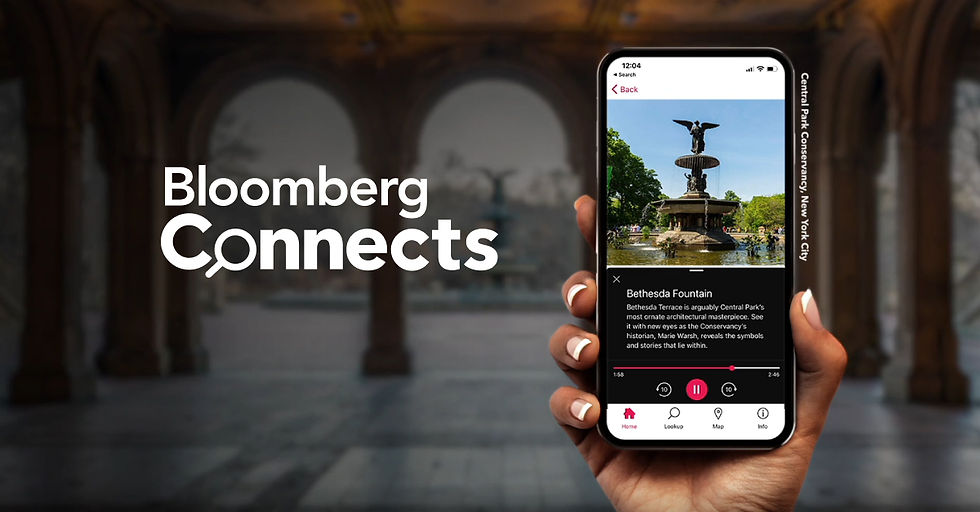
This spring, with our new volunteer Gen, we’ll be starting work on something very exciting for the museum: a Bloomberg Connects audio guide, with training beginning in February and a planned launch in April.
The guide is inspired by the spirit of Down Your Way and the wonderful oral history recordings already in our collection. Rather than a voice telling you where to walk and what to look at, this will be something much more Staithes: snippets of interviews, conversations, memories and stories, all connected to the objects you’re standing in front of.
You might be looking at a white Staithes bonnet and hear a clip from the Down Your Way interview where local women talk about wearing them. You might stand by the fishing tools and hear dialect words spoken in local voices. You might be upstairs by the clocks and hear a volunteer explain why longitude mattered so much to Cook.
The idea is that the stories come from the people of Staithes — past and present, and from the volunteers who help keep the stories alive. .
We’ll be using:
our existing audio interviews,
new recordings with volunteers,
photographs and short films,
and the knowledge our volunteer guides share every day.
Importantly, this guide is supplemental to, not a replacement for, our volunteer guides. It’s a way of capturing their knowledge, making it accessible to more people, and allowing visitors to listen at their own pace — especially in a building where we’ve simply run out of space for more labels.
Bloomberg Connects is used by hundreds of museums worldwide, and many of our neighbours — including Whitby Museum and the North York Moors — are already part of it. Visitors use it on their own phones, free of charge.
We’re very much at the planning stage, but we’re excited about the possibilities: a museum where you don’t just see Staithes’ history, but hear it too. In many ways, it’s a way of letting the museum speak in the voices of the people who know it best.
More to follow as we start recording in February.
“Cheers for the Champions” – Staithes Cricket Club uncovered
We’ve recently published a fascinating new blog post about the forgotten story of Staithes Cricket Club and its brief but brilliant success in the late 1890s.
The research was generously shared with us by cricket historian Roy Hyde, who uncovered a celebratory cricket song performed at a club dinner in 1897 after Staithes won the Whitby & District League. The song names many of the players and opens up a vivid picture of cricket as a huge part of village social life.
The article traces cricket in Staithes back to 1870, explores the role of local clergy in encouraging the sport, and tells the story of Samuel Browne of Ridge House, whose patronage — along with a professional player called Allan — helped propel the team to league victory in 1897.
Along the way, familiar Staithes names appear, including Bennison, Dix, and Dawson, alongside visiting players, miners, artists from the Staithes Group, and even connections to the sporting Wreford-Brown family.
It’s a wonderful example of how sport, community, industry and social life were intertwined in Victorian Staithes.
You can read the full article on our blog here: https://www.staithes-museum.org.uk/post/cheers-for-the-champions-cricket-community-and-celebration-in-victorian-staithes
With sincere thanks to Roy Hyde for sharing his research with the museum.
Looking ahead to Cook300

Although 2028 may feel a little way off, we’re already beginning to work with other local museums on plans to mark Captain Cook’s 300th birthday.
Staithes Museum is part of an early consortium with partners in Great Ayton, Whitby and Middlesbrough, exploring ideas for joint events, shared storytelling and ways to encourage visitors to follow Cook’s journey across Yorkshire. Early discussions have included everything from inviting the Endeavour replica back to the region, to the idea of a Cook Trail “passport”, allowing visitors to collect stamps as they visit each site.
It’s very much still at the planning stage, but we’re excited about the potential to work collaboratively and to tell a richer, more connected story across all four places. It’s exciting to be working collaboratively to make 2028 something really special for our area.
Speaking of cookiverssaries…
Object of the Month: The Volunteer Guide’s Straw Boater from the 1997 Endeavour Visit

This month, our Object of the Month celebrates a piece of Staithes history that captures community pride and our connection to Captain Cook: the straw boater hat worn by volunteer guides during the H.M. Bark Endeavour replica’s visit in May 1997.
On 8th May 1997, the village welcomed the full-scale Endeavour with a “tremendous welcome.” After sheltering overnight in Runswick Bay, the ship sailed into Staithes before moving on to Whitby on the evening tide. The day was marked by extraordinary local spirit: streets filled with residents in traditional attire—including five Staithes ladies in their iconic bonnets and smocks—and schoolchildren dressed in period costume, pulling a cannon down the High Street as part of the parade.

Reg Firth, the founder of the Staithes Heritage Centre, was a key organiser of the visit and even took part in a voyage on the replica himself. The straw boater was worn by the official guides who helped visitors engage with the story of Cook, his apprenticeship here under William Sanderson, and the significance of the Endeavour’s return.
Alongside the boater, our collection includes other souvenirs of the day: Endeavour Port (bottle No. 7), commemorative glassware, medallions, and the “Homecoming Plate” linking the original 1768 voyage to the 1997 visit.

These objects are more than memorabilia—they celebrate the enduring link between Staithes and Cook, and the dedication of local people like Reg who ensured that history was shared with pride. As we look forward to Cook300, this cheerful hat reminds us of the spirit and generosity of the Staithes community, and how our shared stories come alive through people as much as through objects.

Blue Latitudes by Tony Horowitz - Reg Firth: Keeper of Cook
I never met Reg Firth, yet reading Tony Horowitz’s chapter in Blue Latitudes—found for me by Bill Hinchley—was like meeting him through the pages. What comes across most vividly is his deep, personal connection to Captain Cook and to the museum he created in Staithes.
Reg was a man of meticulous care and boundless energy. He reconstructed Sanderson’s shop—the place where Cook once worked—as a two-story display, complete with a cobbled floor, a counter fashioned from the old pulpit, and shelves full of goods. Every detail mattered: the height of the windows, the authenticity of the shutters. “The only thing wrong is the windows,” he fretted, “they’re four feet high and they should be five, but I was restricted for space.” Small imperfections vexed him almost as much as the treasures themselves delighted him.
Horowitz captures Reg’s reverence for both objects and history. From blue bottle shards possibly from Cooktown to Sanderson’s will, every item was treated with care, carefully contextualised, and shared enthusiastically. “If you get hold of something, you have to see it through to the end. Cook was like that, wasn’t he?” he said, echoing the same sense of duty he admired in Cook himself.
Reg’s dedication was personal and absolute. He and his wife Ann sold everything they owned, lived in a trailer for seven years, and poured years of effort into turning a derelict chapel into a museum. He had once been a fishing boat captain and Whitby mayor, yet he gave it all up to devote himself to this collection. “Cost me me boat, me house—everything—and years of hard work building this brick by board,” he said. His attachment wasn’t just to the objects but to the act of preserving Cook’s story in Staithes, rooted in the town where the great navigator once worked.
Reading the chapter, what struck me most was Reg’s philosophy about Cook—and about life. He admired Cook’s humility, plain living, and focus on the work itself. “Most places, they go for aristocracy, or people who seek it. When you go down to London, the museums are all Horatio Nelson. They’ve no time for Cook, who taught himself and didn’t have money to buy into his job,” he observed. For Reg, championing Cook was about celebrating these quiet virtues, the diligence, and the grounded humanity that resonated with him as a Yorkshireman.
Reg’s personality—fussy, warm, slightly eccentric, and endlessly enthusiastic—shines through Horowitz’s account. He called out drawers, instructed his invisible assistants, and bounded up stairs to highlight particular objects, all with a sense of devotion that was almost theatrical. But underlying the bustle was an unmistakable love for the work he had chosen, and for the man who inspired it.
Horowitz’s chapter paints Reg not just as a collector or curator, but as someone for whom the museum was a vocation, a mission, and a joy. His life was entwined with the collection: every object, every display, every careful reproduction reflected a man who had made it his purpose to honor Cook. Reading it, I felt as if I could sense Reg standing beside me, eager to show the next treasure, insisting on precision, yet quietly proud of what he had built.
Staithes Museum Applies for King’s Award for Volunteering
We are delighted to announce that Staithes Museum and Heritage Trust has submitted an application for the King’s Award for Volunteering, recognising the extraordinary contribution of our volunteers to the village and wider community.
The museum is entirely volunteer-led, with 35 volunteers dedicating around 80 hours per week to preserving and sharing Staithes’ rich heritage. From cataloguing oral histories and archives to welcoming visitors, running our retail shop, delivering outreach in schools and care homes, and guiding museum tours, our volunteers bring history to life every day.
Thanks to their dedication, Staithes Museum attracts around 47,500 visitors annually and ensures the village’s history—from its fishing traditions to Captain Cook’s early life—is accessible, engaging, and celebrated. The museum is a focal point for the community, offering a sense of belonging and pride, while keeping local stories and artefacts alive for future generations.
Our application highlights how volunteers, alongside a small team of paid staff, fill gaps in local cultural provision, develop learning opportunities, and safeguard community memory. We are proud to see this incredible effort recognised at a national level, and fingers are crossed for a positive outcome!
Visit from the High Sheriff – Volunteers Welcome
We are pleased to let you know that at 2pm on Wednesday 5th March, the High Sheriff of North Yorkshire and Teesside will be visiting Staithes Museum.
If any volunteers would like to come in, meet them, and help show them around the museum, you would be very welcome to join us. It’s a lovely opportunity to share the stories of Staithes and the work of the museum with distinguished visitors. We’ll get the posh biscuits out!
We hope to see some of you there.
- Rosie

P.S. Message from Jim - Diary Date – Saturday 28th February, 7pm, Smugglers (above Staithes Art Gallery)
Tim Dalling presents Ivor Cutler and the Shinytribe — a brilliant double bill of songs and stories. £18 suggested donation (includes food). Book early by messaging/WhatsApp Jim on 07779 861709. It’s Jim’s birthday weekend, so there will be cake! 🎂


Comments