
A Merchant of Some Consequence: William Sanderson, Captain Cook and the Sanderson Papers


Sometimes a family history enquiry opens up rather more than a family tree.
A recent enquiry from a descendant of the Sanderson family sent us back into the Staithes Museum research archive, to revisit a fascinating collection of material gathered by local researcher (and museum collector, founder and curator) Reg Firth. The papers concern William Sanderson, an eighteenth-century Staithes merchant whose name is familiar because of his connection with a young James Cook. But the more we looked, the more we discovered that William's story was considerably bigger than the familiar tale of Captain Cook's early employment.
There were shops and warehouses, substantial estates, a family will, a network of business connections stretching from Staithes to London, ships that were lost, creditors who came knocking, and a rather unfortunate habit of hiding in the back room.
The collection also contains something particularly interesting: the research trail itself. Reg's family trees, handwritten notes, transcriptions, correspondence and photocopies show how he pieced together the story over many years, often with help from other researchers and institutions.
In response to the descendant's enquiry, we have been working through the material and digitising the documents, making them more accessible. It seemed a good opportunity to share some of the discoveries, too.
So, let's meet William Sanderson.
A merchant, a grocer, a haberdasher – and apparently Staithes' banker

One of the most interesting documents in Reg's collection is a typed biographical account headed William Sanderson – Haberdasher and Grocer. It contains a wonderfully forthright description of a man who, Reg felt, had not always received quite the recognition he deserved.
It begins by explaining that William was the son of William Sanders, a tailor of Staithes, born on 15 May 1687 and died in 1736. Reg was keen to correct the impression that William Sanderson was simply a little village shopkeeper:
He was much more than the simple shop keeper which history portrays. In his will he had the SHOP and WAREHOUSES at Staithes, Estates at Handale and Hinderwell amounting to many hundreds of acres each, a farm at Hinderwell and houses at Hinderwell, Lofthouse and Whitby.
And then comes an intriguing addition:
He was also the BANKER for Staithes, showing he was a business man of some consequence.
The description of William as the village banker is particularly interesting, suggesting a role in the local economy that goes beyond his name above the door of a little greengrocer’s shop on the staith. Reg's argument is that William was a substantial merchant with property, land and commercial interests extending well beyond Staithes itself.
His biographical notes give his baptism as 1 November 1724 and his death as 12 November 1773. He was buried in the family vault in Hinderwell churchyard. William married Elizabeth Gill, daughter of a Customs Officer, on 6 July 1741. Reg's notes record that Elizabeth was born on 21 November 1724 and died in December 1813. Reg's notes give William and Elizabeth a total of fourteen children. The family tree material contains further information about their descendants, although an interesting distinction appears in William's will, which names nine children – John and eight younger.

The connection with James Cook comes next.
Reg's account states:
When she was expecting their second child William, who was born on 17th August 1745 (and who died aged 22 in 1767 in the East Indies), the future Captain Cook was employed to help in the shop.
This places Cook's employment in the Sanderson household in 1745, a detail that Reg was keen to preserve in his account of William's life.

There is another lovely little observation in the same notes. William held a family pew in Lofthouse Church and another in Hinderwell Church. Reg suggests that it is most probable that young James Cook worshipped with his master in Hinderwell Church.
What William left behind: his last will and testament

One of the treasures in the collection is Reg’s thirteen-page handwritten transcription of William Sanderson's will, dated 14 August 1773. The handwriting is wonderfully legible (unlike the photocopy we’ve got of the original document), and it is one of those documents that gives us a much better sense of the person behind the family history.

The will begins:
I William Sanderson of Staithes in the Parish of Hinderwell in the County of York Merchant do make this my last Will and Testament in manner following.
William describes the property in which he lived, including the shop and warehouses. He leaves these to his eldest son John:
I give and devise all that messuage or tenement in Staithes aforesaid wherein I now dwell with the shop, warehouses and appurtenances thereunto belonging, and all the fixtures standing and being therein unto my eldest son John Sanderson his heirs and assigns.
The rest of the will makes equally interesting reading. William appoints his wife Elizabeth, his son John and John Harrison of Guisborough as trustees. They are to sell his other freehold and leasehold properties, either together or in parcels, for the best price they can obtain.
The proceeds are to be used to discharge his debts and provide for his family.
There is considerable attention given to Elizabeth's financial security and the future of the children. William makes arrangements for the income from the remaining money and property to support his wife and provide for the children's maintenance and education. He specifically names:
My eight younger children Elizabeth, Ann, Robert, Augustine, Thomas, George, William and Isaac Sanderson.
Together with John, these are the nine children named in the will.
There is also a clear division of the money remaining after the sale of the properties. William directs that one tenth should go to Elizabeth for her own use, with the remaining nine tenths held for the benefit of the nine children. It is a carefully constructed arrangement, designed to protect the family and ensure that the money is not simply spent or dissipated.
William signed his will on 14 August 1773. The transcription records that it was entered in the register at Northallerton on 21 March 1774, in Book BB, page 190, number 501.
He died just three months after making it.
The business carries on

After William's death, Elizabeth and their eldest son John continued the business. Reg's biographical notes say they traded as John and Elizabeth Sanderson, carrying on the shop until their bankruptcy in 1788.The original business was now in the hands of the next generation, but it seems that the financial arrangements and commercial risks were considerably more complicated than the family might have hoped.
Among the papers are typed transcripts of the Chancery bankruptcy proceedings of Elizabeth and John Saunderson, held under Public Record Office references B3 4440 and B3 4441.
One small detail worth noting is the spelling. William's will uses Sanderson, but the bankruptcy records frequently use Saunderson. The partnership is described in the records as Elizabeth and John Saunderson of Staithes, shopkeepers and partners, carrying on trade under the name of John Saunderson. It is the same family, but a useful reminder that historical spelling was not always consistent. The bankruptcy papers give us a remarkably detailed account of the family's business, its creditors and the events leading up to its collapse.
Hiding in the back room

The formal bankruptcy of Elizabeth and John Saunderson was initiated in London on 26 June 1788 under a Parliamentary Commission of Bankruptcy issued pursuant to "An Act to Prevent the Committing of Frauds by Bankrupts." The appointed Commissioners included William Dowdeswell, John William Rose Esq., Austin Greenland Gent., and Thomas Nugent Esq. Creditor hearings were held at the Guildhall Coffee House, King Street, Cheapside, London, on 15 July and 29 July 1788.
A central piece of evidence preserved in Chancery File B3 4440/4441 is the sworn deposition of William Peacick (Peacock), who served as shopman to Elizabeth Saunderson for one year and eight months prior to the collapse. Peacick’s examination illuminates the operational decline of the Staithes store and the partners' attempts to evade process servers and major lenders.
William Peacick, Shopman to Elizabeth Saunderson... lived with them for 1 year 8 months he said they bought lots of goods, Linen Drapery, and sold them to get a living. He said their business E. and J. Saunderson having been for some time past in a deranged state, they could not pay bills.
This is a rather useful description of the business. It sold linen and drapery, bought goods in quantity and relied on selling them to generate enough money to keep trading. But things had gone badly wrong.
The next part of the transcript is even more revealing:
28.5. Mr Easterby a creditor came to the house and he was informed they were not at home they were hiding in the back room.
Mr Pearson came to the house a major creditor told the same thing but they were hiding in back room.
There is something wonderfully human about this little passage. We can imagine Mr Easterby arriving at the shop, asking for Elizabeth and John, and being told they were out. Then Mr Pearson arrives, receives the same answer, and meanwhile the unfortunate shopkeepers are apparently keeping very quiet somewhere at the back. Did they have sofas to hide behind back then?
It is a small detail, but it brings the bankruptcy out of the world of ledgers and legal proceedings and into a very recognisable human situation. Unfortunately, hiding from creditors was not going to solve the problem.
Following Peacick’s testimony and subsequent depositions, the Commissioners formally declared Elizabeth and John Saunderson bankrupt, empowering assignees Thomas Maynard and Francis Easterby to seize and liquidate all real and personal property for the benefit of proven creditors.
A very long list of people owed money

The bankruptcy records contain extensive lists of these creditors, giving us an extraordinary picture of the commercial world in which the Sandersons operated. There were substantial debts to London businesses. One of the largest appears against Thomas Pearson of King Street, Cheapside, described as an Irish factor. The sum recorded was £2,302 15s. 7d. Other London creditors included grocers, merchants, a confectioner, a vinegar merchant, a glover and a haberdasher. The business had clearly been buying goods from a wide range of suppliers, often on credit.
But it was not just London's wholesale merchants who were affected. The lists include numerous people from Staithes, Hinderwell, Loftus, Lofthouse, Whitby and the surrounding area. mong them were:
Elenor Marshall (Staithes): £465 0s. 4d. owed to the widow of James Marshall.
Ann Burton (Staithes): £300 16s. 2d. owed to the widow of Richard Burton (bond dated 1783).
Anthony Jefferson (Hinderwell): £242 15s. 2d. for personal loans and ship repairs.
Thomas White (Easington): £48 13s. 4d. yeoman debt.
John Hunter & Thomas Porrill (Staithes): £46 15s. 2d. each owed to local fishermen.
John Mellor & John Huntrodes (Whitby): Maritime tradesmen owed £45 8s. 3d. (ropemaker) and £53 17s. 10d. (blockmaker).
The documents also name boat builders, coopers, innkeepers, spinsters, widows, farmers, mariners and other local tradespeople. There is something particularly interesting about seeing so many local women included in the creditor lists. Alice Marshall, Ann Burton, Elenor Marshall, Mary Andrews and Hannah Newton all appear, alongside women identified as widows or spinsters.
These are not just names in a family tree. They are people with money invested in, or owed by, one of the village's most substantial businesses. The total liabilities recorded in the bankruptcy account were £4,454 9s. 6d.
The proceedings continued for years. An account dated 15 December 1798 records that creditors who had proved their debts were to receive a dividend of ten shillings in the pound. The record puts it:
To pay the creditors of the said bankrupt who have today proven their debts a dividend of ten shillings in the pound a proportion to their respective debts.
A decade after the bankruptcy began, the creditors were still receiving payments from the remaining funds.
Ships, shipwrecks and disputed debts
The Sanderson business was not confined to shopkeeping. The bankruptcy papers reveal involvement in coastal shipping and the transport of goods like coal, timber and alum between Staithes and other ports. The Chancery examinations of Elizabeth and John Sanderson explicitly record three vessels connected to their business operations and debts:
The Ship Midsummer : Wholly owned by the Sandersons, the Midsummer stranded in the river at Wisbech, Cambridgeshire, where she lay buried in shifting sand. Hinderwell gentleman Anthony Jefferson deposed that he had advanced £100 on a promissory note for ship repairs. Instead of returning the vessel, the Sandersons navigated her in their own names without his consent until her stranding in October 1783. Jefferson claimed the right to salvage stores from the wreck (estimated total value £300) to offset his loss.
The Ship Dove : The examination records state that the Dove , wholly owned by the Sandersons, dropped anchor off the coast of Staithes, broke away, and became completely buried in the sand.
The Vessel Experiment : Master Mariner William Reed of Whitby submitted a bankruptcy claim of £3 9s. 0d. for goods, wares, and merchandise freighted from Staithes aboard the Experiment
The bankruptcy papers therefore preserve not only the story of a failing shop but also a wider commercial network involving shipping, freight and maritime trade.
Liquidating the portfolio
To satisfy their creditors, Elizabeth and John Saunderson were forced to submit a complete schedule of their real estate holdings, land inheritances, and property encumbrances.
Handale (Grindale) Abbey Estate
The principal real estate asset claimed by the bankrupts was the Manor of Handale (otherwise Grindale) Abbey , situated in the parish of Loftus. The estate comprised approximately 290 acres of land, together with tythes and rights of common.
Mortgage Liability: Prior to the bankruptcy, Elizabeth and John Saunderson mortgaged the Handale Abbey estate to James Bonson of Aislaby, Whitby, Esq., for £3,000 at 5% annual interest.
Subsequent Sale: Unable to clear the mortgage, the estate was liquidated during court proceedings. Archival accounts record that Thomas Richardson of Manchester (who married Elizabeth Sanderson in April 1779) acquired the Handale property, where he established a corduroy manufacturing mill. Later bankruptcy accounts note a sale figure of £533 6s. 8d. received by Mr. Skotow for Hinderwell/Handale parcels.
Staithes Commercial Property & The Mulgrave Tenancy
The primary retail shop and warehouses in Staithes occupied a complex legal position:
Lord Mulgrave’s Land: William Sanderson originally constructed the shop, warehouses, and outbuildings on land owned by the Right Honorable Lord Mulgrave, paying an annual ground rent of £1 7s. 6d. Because the buildings were erected on Mulgrave land without a formal conveyance, John Sanderson could not sell the premises without Lord Mulgrave’s express permission.
Post-Bankruptcy History & Relocation: Following the 1788 liquidation, the property reverted to the Mulgrave estate and was acquired by merchant Richard Hutton. After severe coastal storms damaged the beachfront structures, Hutton dismantled the original building and reconstructed it on formal Weatherhill Street (now Church Street). Known historically as Cook’s Cottage , the relocated structure survives today as a private residence, with its original 18th-century shop shutters preserved in the Staithes Museum.
Additional Land Holdings & Minor Property Claims
Hinderwell Farm (81 Acres): Elizabeth Saunderson claimed a one-third undivided share in fee simple of an 81-acre farm in Hinderwell under a 1742 marriage settlement executed by her father, Customs Officer Samuel Gill.
Howle Close: A two-acre meadow close in Hinderwell, agreed to be sold to Thomas White for £120 prior to the bankruptcy.
North Loftus Cottage: A cottage, tenement, and garth occupied by Thomas Pressick, contracted for sale at £102.
Manorial Rights: Rights of turbary on Helredale Intack and rights of common on Wapley Moor.
Ecclesiastical Pews: Formally claimed pews in both Lofthouse Parish Church and Hinderwell Parish Church.
Vizagapatam Claim: An unrecovered claim to a four-tenths share in the East India estate of John Sanderson, Esq., former Governor of Vizagapatam.
The shop, the storms and Cook's Cottage

Reg's research also includes a short account of what happened to the Staithes shop after the bankruptcy. His notes describe the original premises as being somewhere near the present Cod and Lobster public house. The typed account explains that, following the bankruptcy, the business continued under a new proprietor, and that a succession of storms destroyed a number of the houses along the seafront. The building was subsequently moved to its present position in Church Street, formerly Weatherhill Street, using some of the building material salvaged from the original shop. Reg's notes identify the building as the one now known as Cook's Cottage.
There are handwritten annotations on this document which draw attention to the original shop fittings. In particular, the notes record that the window shutters from the shop, which are now in Staithes Museum.

The family tree gets bigger

Alongside the legal and commercial records, Reg assembled a substantial collection of genealogical material. File 048 contains family charts, parish register information, gravestone inscriptions, and notes on births, marriages and burials. The wider inventory describes an extensive collection of handwritten genealogical research, including family trees and census notes. The charts follow the Sanderson family through multiple generations, with branches extending well beyond Staithes. They are full of the details that family historians spend hours trying to find: baptism dates, marriages, burials, names of spouses and the relationships between different branches of a family.
Reg's work traces the family back to William Sanders, the Staithes tailor, and follows the descendants of William Sanderson and Elizabeth Gill. It also helps distinguish people with the same names, which is especially important when researching a family that appears in records across several parishes and generations.
William Sanders (Tailor, d. 1736): Patriarch of the Staithes lineage, father of William Sanderson the merchant.
William Sanderson (Merchant, 1724–1773): Married Elizabeth Gill (1724–1813) on 6 July 1741. Devised Staithes shop and trusts in his 1773 will.
John Sanderson (Merchant & Bankrupt, 1751–1832): Eldest son and chief beneficiary under William’s will. Partner in the 1788 bankruptcy proceedings. Died 18 July 1832 aged 81.
Elizabeth Sanderson (1753–1813): Daughter of William; married Thomas Richardson of Manchester (purchaser of Handale Abbey) in April 1779.
Ann Sanderson (1755–1808): Daughter of William; married George Dodds of Boulby (gentleman, d. 1808).
The archive includes further legal and testamentary documents associated with these family connections. This is one of the reasons the collection is so useful to descendants. A family tree gives us the structure, but the accompanying wills, letters and business records tell us about the lives people actually lived.
George Dodds' Will & Codicil (File 039)
Dated October 1808, the will of George Dodds of Boulby (husband of Ann Sanderson) established extensive trusts for his family. A codicil executed in July 1832 appointed his brother-in-law John Sanderson of Staithes as a primary beneficiary and administrator, confirming that John Sanderson remained active in family legal affairs until his death in July 1832 at age 81.
Clarification of some family tree spaghetti (File 048)
This document resolves a long-standing genealogical ambiguity regarding William Sanderson. Local tradition and heritage displays frequently conflated William Sanderson the Staithes merchant with contemporary namesakes. Research by John Sanderson (2005) and archival grave transcriptions confirm:
William Sanderson the Merchant (1724–1773): Baptized 1 November 1724, married Elizabeth Gill in 1741, operated the Staithes shop where James Cook was employed, and died 12 November 1773 aged 62.
William Sanderson of Borrowby / Blackbush (1724–1750): Son of William and Susanna Sanderson, married Mary Shimmin in 1750 and resided at Blackbush, representing a distinct branch of the regional Sanderson lineage.
The plot thickens: Reg's correspondence with the Stepney Historical Trust

Another brilliant discovery in the collection is a series of letters between Reg Firth and Julia Hunt of the Stepney Historical Trust. They remind us that historical research rarely happens in isolation. Reg was corresponding with other researchers, sharing information, requesting copies of documents and following connections between families and places.
A letter dated 21 January 1995 from Julia Hunt sends Reg a copy of the bankruptcy records of Elizabeth and John Saunderson. She writes:
Please find enclosed copy of Elizabeth Saunderson and John Saunderson Bankruptcy. Hope you find this information useful to the heritage centre.
She explains that the Trust holds copyright in the material and asks that they be acknowledged if the documents are used or displayed. She also tells Reg that she is going to photocopy documents from the Public Records Office and send them to him, while continuing to look for William Sanderson's will.
This is an interesting detail because it shows how the research developed. Reg was not simply working from documents already held in Staithes. He was building up the collection through contacts with other researchers and institutions, gathering copies of records held elsewhere.
Another letter from Julia is even more intriguing. She discusses connections between people associated with Staithes, Whitby, Wapping and Shadwell in East London, following the coal, timber and alum trades.
She mentions Robert Smith, an undertaker from Mile End, whom she believed might have been related to Mrs Cook. She also discusses Isaac Smith, who sailed with Cook aboard the Endeavour, and possible connections between the Smith family and people involved in maritime trade. She writes:
All this evidence proves that the Cooker's and Mrs Cook family Smiths knew each other long before Cook ever came to Wapping in other words they were all business partners in the Coal Timber Alum Trade from Whitby to Wapping.
The letter then introduces another possible connection. Julia had found a ship named the Hannah, whose captain was Joseph Saunderson, and wondered whether he might be related to the Saunderson family of Staithes. Then comes my favourite sentence:
The plot thickens it seems that Whitby and Staithes people who came down on the ships had addresses in Wapping and Shadwell.
Julia was following the people who travelled down the coast and into London's riverside communities, looking at the addresses they used, their business partnerships and their family connections. She also mentions John Blackburn, who married Elizabeth Batt's mother Mary Smith, and suggests a connection with the coal trade and smuggling operating from the Bell public house.
These are fascinating research leads, although they are best understood as Julia's developing theories rather than established family connections. What they do show is the extent of the network of enquiries surrounding Cook, the Sandersons and the maritime trade.
The correspondence is a lovely part of the archive because it captures researchers thinking aloud, sharing discoveries and following one possible connection after another. It also gives us a glimpse of the amount of work involved in bringing historical material together before the days of online catalogues and digitised archives. There were letters, photocopies, books sent through the post, and trips to the Public Records Office.
Why these papers matter

Looking through Reg Firth's research, it becomes clear that the value of the collection lies in the way all the different documents work together.
William's will tells us how he wanted his business and property divided. The bankruptcy records tell us what happened to the business after his death. The creditor lists reveal the people and businesses connected with it. The shipping records bring in the maritime trade. The family charts help establish the generations, while the letters show how Reg and other researchers built up the evidence.
And there are the little details: a shopman describing the business as being in a "deranged state"; Elizabeth and John apparently hiding in the back room; a disputed shipwreck; Julia Hunt writing that "the plot thickens"; and the original shop shutters finding their way into the museum collection.

The recent enquiry from a Sanderson descendant has given us a very good reason to revisit these papers, organise the material and digitise it. It is particularly pleasing to know that the work will help someone follow their own family history back to Staithes. But it has also reminded us that these records tell a much wider story. William Sanderson was not simply the man who employed James Cook. He was a merchant with a substantial business, property interests, family responsibilities and connections stretching far beyond the village. His son John and widow Elizabeth continued that enterprise, until the bankruptcy proceedings of 1788 brought it crashing down.
And thanks to Reg Firth's research, and the work of the other historians who helped him along the way, we have a wonderful collection of material that allows us to piece that story together.
It is exactly the sort of history we love discovering in the museum archive: not just famous names and important dates, but the people, businesses, relationships, arguments and occasionally rather desperate attempts to avoid answering the door.
The Sanderson papers are held in the Staithes Museum research archive. The collection includes family research, wills, bankruptcy transcripts, correspondence and other historical material relating to William Sanderson and his descendants.
Archive Ref. | Physical File Code | Document Type | Primary Historical Contents & Analytical Focus |
TEMP.418 | File 039 | Photocopy (5 pp.) | Original probate photocopy of the Last Will and Testament of William Sanderson (1724–1773), drafted 14 August 1773 and probated at York 28 March 1774. |
TEMP.419 | File 039 | Manuscript (13 pp.) | Complete line-by-line handwritten transcription of William Sanderson’s 1773 will, detailing trust devises, land sales, and child provisions. |
TEMP.421 | File 040 | Manuscript & Research | Detailed genealogical study of the Sanderson family, featuring handwritten lineage charts, gravestone inscriptions from Hinderwell, and baptismal lists. |
TEMP.422 | File 037 | Typed Transcripts | Official transcript of Chancery bankruptcy records (B3 4440/4441) detailing debt ledgers, creditor lists, shopman testimony, and vessel losses. |
TEMP.423 | File 037 | Cartographic Map | Oversized (A3) historical cartographic survey of Loftus, Easington, and surrounding manors, detailing municipal boundaries and land tracts. |
TEMP.424 | File 037 | Manuscript Extract | Three-page historical extract regarding Handale (Grindale) Priory, transcribed from Minnie C. Horton’s History of Cleveland. |
TEMP.425 | File 037 | Duplicate Transcript | Secondary copy of TEMP.422 containing London wholesale debt schedules and creditor meeting notes from Guildhall. |
TEMP.426 | File 037 | Manuscript (4 pp.) | Verbatim handwritten transcription of TEMP.427 detailing the amended Chancery examinations of Elizabeth and John Saunderson. |
TEMP.427 | File 0375 / PRO B3/4441 | Archival Photocopy | Large-format (A2) Public Record Office photocopy of the original 1788 bankruptcy examination depositions signed by Elizabeth and John Saunderson. |
TEMP.466 | File 047 | Administrative Record | Borthwick Institute of Historical Research search request form and research guide regarding George Dodds (1808/1832) and Elizabeth Dodds. |
TEMP.467 | File 047 | Manuscript (38 pp.) | Extensive 38-page collection of handwritten family trees, parish register extracts, census notes, and genealogical charts. |
TEMP.468 | File 048 | Correspondence | Stepney Historical Trust correspondence (Julia Hunt to Reg Firth) outlining maritime coal/timber trade networks between Staithes and Wapping. |
TEMP.469 | File 048 | Parish Records | Historical compilations of Whitby Quaker records, parish registers of births, marriages, and burials, and directory trade transcripts. |
TEMP.470 | File 048 | Draft Article & Notes | Biographical drafts regarding William Sanderson’s merchant career, Captain James Cook’s employment, and the physical relocation of the Staithes shop. |
File 039 (Dodds) | File 039 | Legal Document | Last Will and Testament and 1832 Codicil of George Dodds of Boulby, gentleman, detailing trusts and appointments involving John Sanderson. |
File 048 (Letter) | File 048 | Research Letter | Correspondence dated 30 June 2005 from John Sanderson to the Captain Cook and Staithes Heritage Centre correcting genealogical errors. |

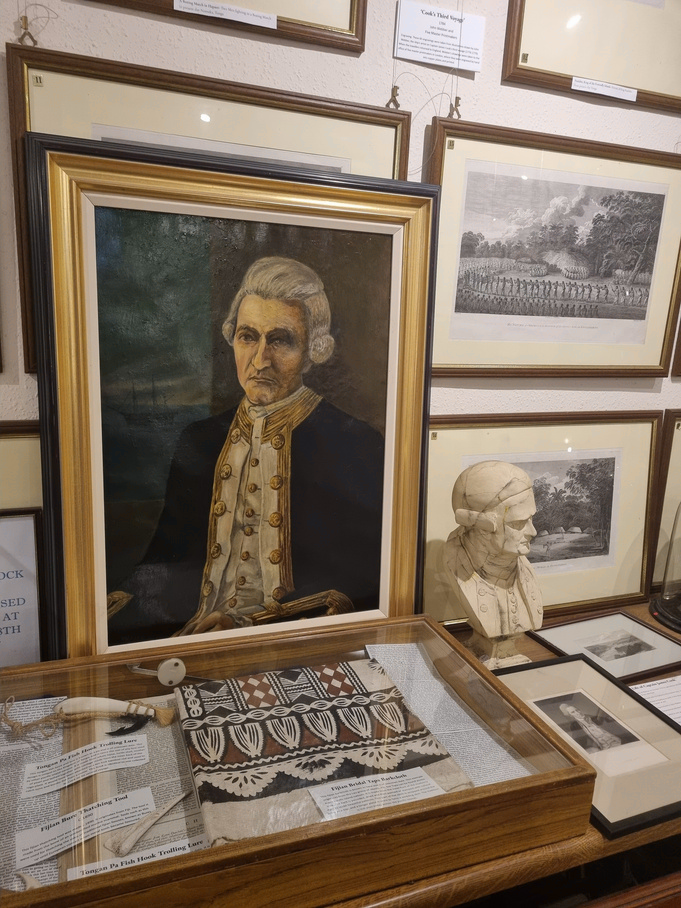

How interesting to read about William Sanderson and how he was related to Captain Cook. Manuscripts such as the Sanderson Papers allow us to see other people involved in these important events and to gain insight into trade and relationships that developed our communities. These kinds of stories are also a stark reminder of the rich knowledge that we can gain by safeguarding these precious moments in our history. However, even opening a bakery involves careful planning. A custom small bakery business plan is invaluable for new owners to help facilitate their thought process, research demand in their area and set attainable financial targets.